
Skill Tree & Castle Upgrades: Node Prices and Buy Order
A walkthrough of the Be The Final Boss skill tree from one full progression run: what each branch does, what nodes cost at every tier, and the order a wave-110 run bought them in — income and roll luck first, then population and unit damage, then the 300,000-coin late tier.
Buy income and roll luck before raw damage — then population, then the 300K tier
This page follows one full Be The Final Boss run, from a wave-9 defeat on a fresh throne to a 110-wave castle, and shows every skill tree purchase the run makes along the way. The pattern that works: early coins go into Coin Income and Summon Luck, Population comes next so more units deploy at once, and the late tiers (Boss Attack III, Boss Health IV, Move Speed III) each ask 300,000 coins. Node prices below are read off the run's own skill tree screens, not datamined.
Source video
“I Must Defeat Him to Become the Final Boss of Roblox” by BachaBlox (18:51, YouTube), contact sheets and frames reviewed 2026-09-20. The run starts from a fresh throne and finishes at wave 110 with 12 minions; every skill tree screen in this guide comes from that footage, and prices are whatever the run's own UI shows.
BachaBlox — I Must Defeat Him to Become the Final Boss of RobloxThe upgrade order this run followed
- 1
Know what you're upgrading: the castle board
The run opens on a fresh throne and loses its first fight at wave 9. The castle sign keeps the run's scoreboard — playtime, heroes slain, highest wave, minions — and every coin the skill tree spends exists to push those four numbers up.
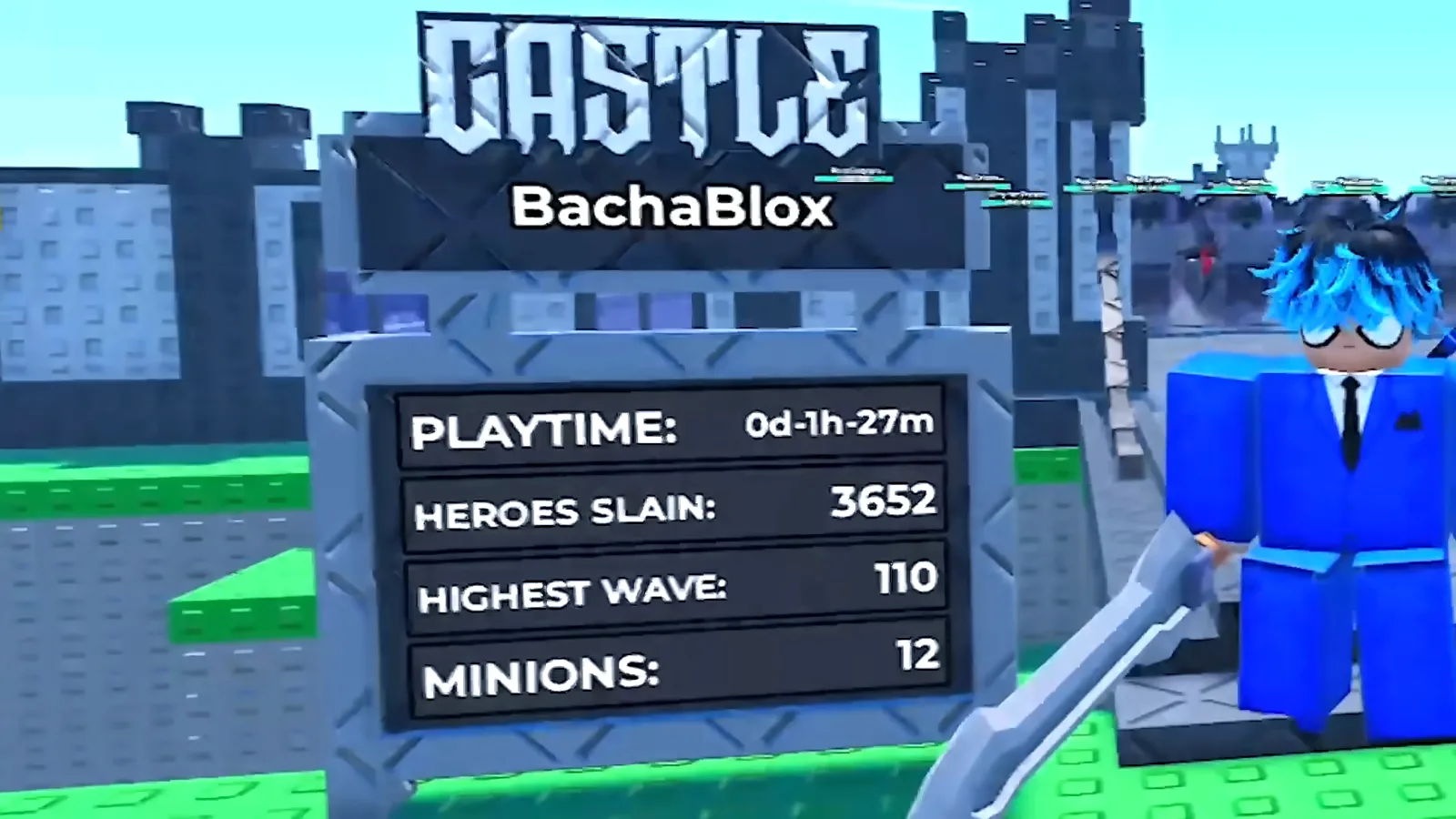
Every coin the skill tree spends protects this board — the castle sign sums up a run at a glance. - 2
Open the tree and read the early prices
Nodes start cheap: Coin Income II at 1,000 coins, Boss Health II at 5,000, Boss Attack II at 10,000. Fast Forward is the one Robux purchase on the early board at R$ 199 — everything else here is bought with coins earned in fights.
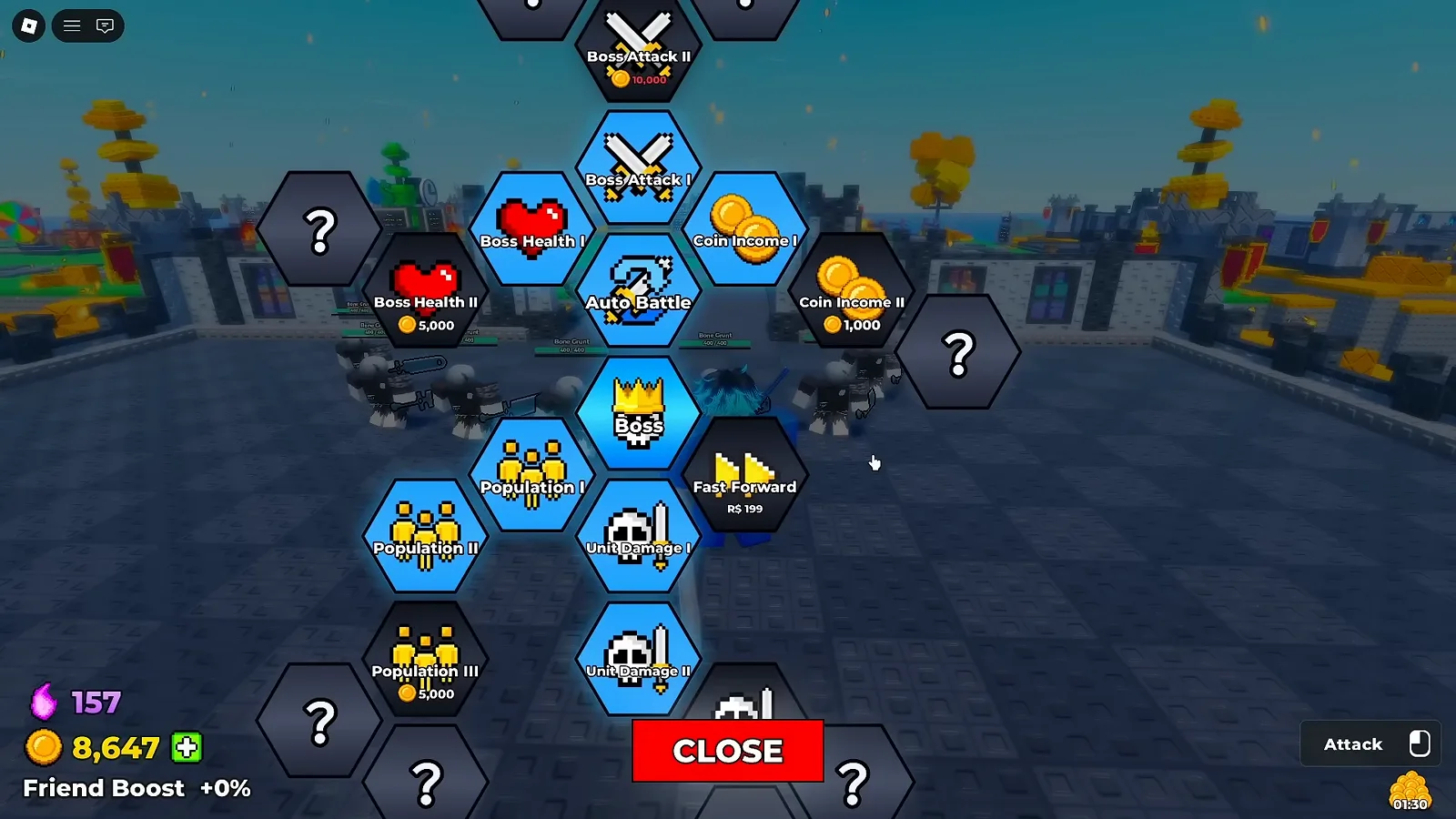
Early prices stay small: the first income and health nodes cost less than one boss wave pays back. - 3
First picks: income and Summon Luck
The run's stated strategy is income before damage, and right after its first income nodes it buys Summon Luck I for 500 coins — “better odds when summoning units, Roll +50%”. Better rolls compound: every later fight summons from a stronger pool.
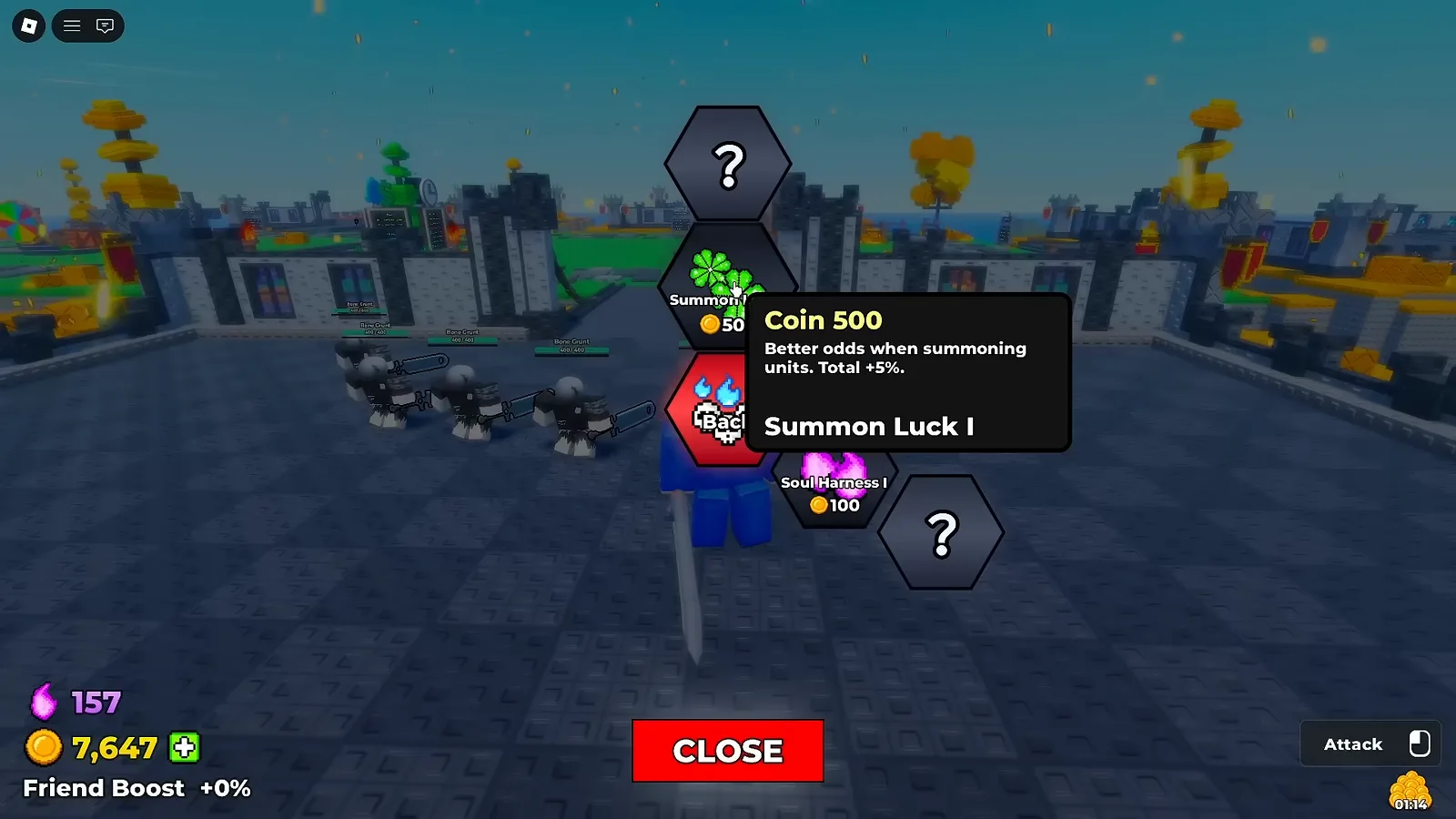
The run buys roll luck early — better summon odds compound through every later fight. - 4
Fill out Population and Unit Damage
With coins flowing, the run works down Population I-III and Unit Damage I-III. Population raises how many units deploy at once — the run climbs from 3 slots to 7 and later to 35 — while Unit Damage multiplies the whole board at once.
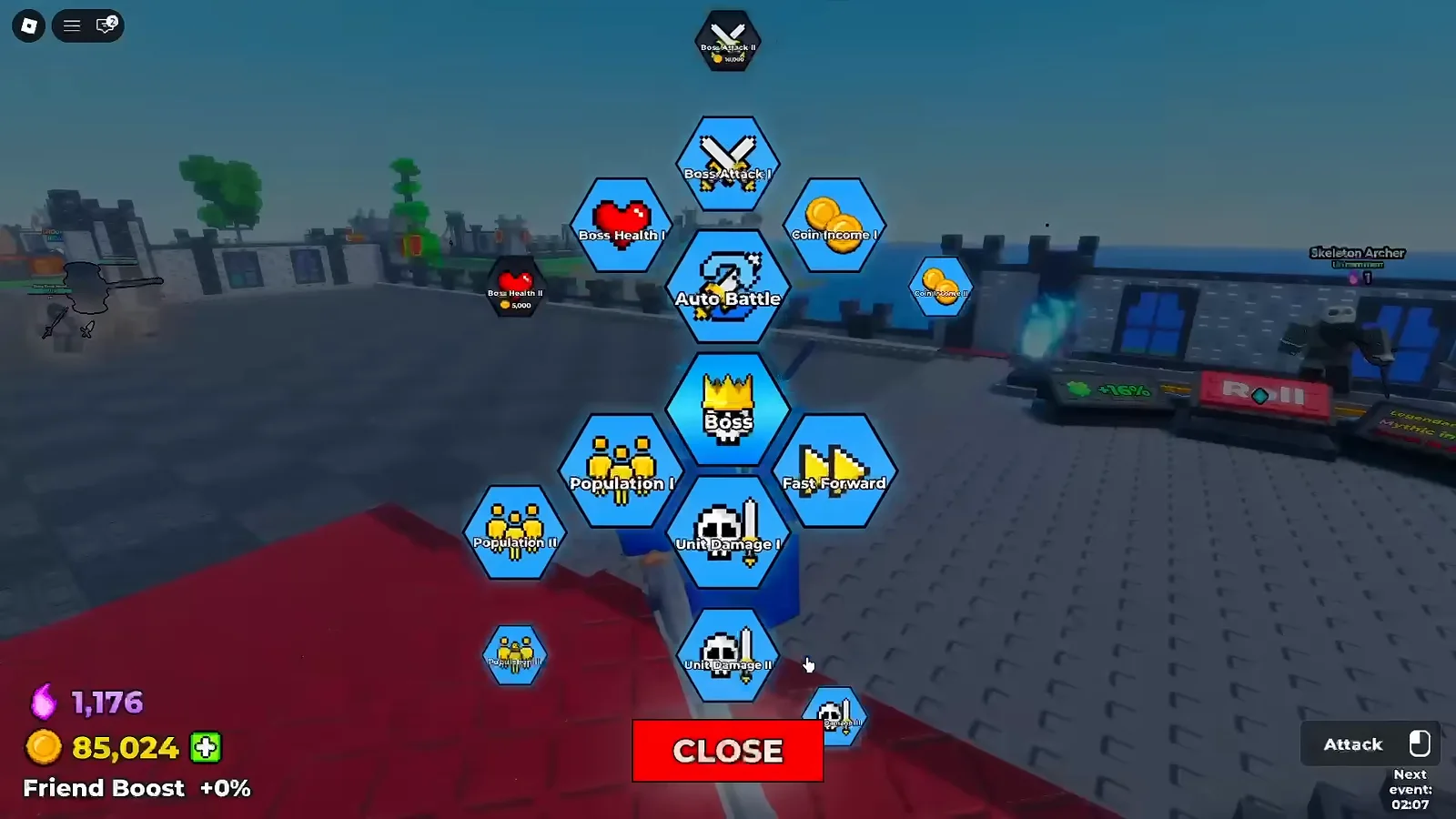
Population raises how many units deploy at once; Unit Damage makes each of them hit harder. - 5
The 300,000-coin tier
The late tree asks 300,000 coins a node: Boss Attack III, Boss Health IV and Move Speed III all show the same price tag. The run affords this by letting fights run at its checkpoint wave — which is the real reason the income branch gets bought first.
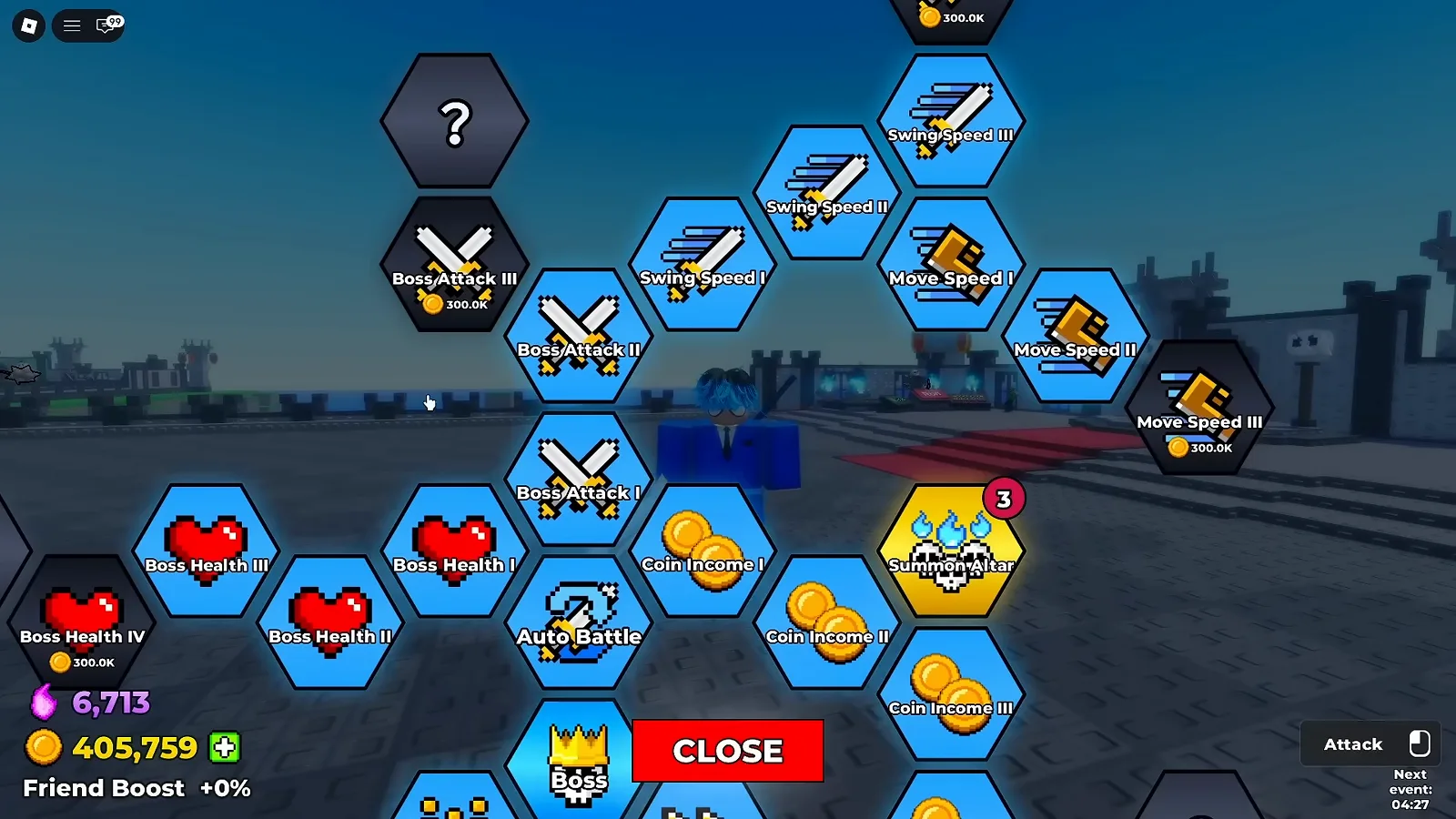
Late tiers jump to 300,000 coins a node — this is where the income branch pays for itself.